
Optical Sorting Technology
Color Sorter Machines
A color sorter — also known as an optical sorting machine — detects defective kernels and foreign material with cameras and removes them from the line with air ejectors. From dried fruit to pulses, in a belt-type configuration — our DMAX model — matched to your product.
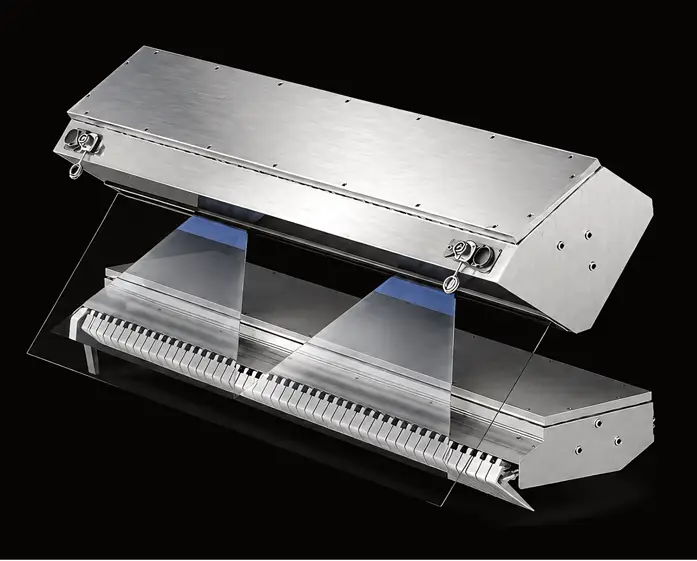
How It Works
Thousands of Kernels per Second,
Inspected One by One
- Feed: Product is metered from the hopper onto the vibratory feeder in a steady, even flow.
- Flow: Kernels travel down the chute — or across the belt in a single layer — forming a thin product curtain.
- Scanning: High-resolution RGB cameras image every kernel under LED lighting.
- Decision: The processor makes the accept-or-reject call within milliseconds.
- Ejection: An air ejector fires a pinpoint burst to blow the defective kernel into the reject stream.
Cameras and Software
Four Technologies That See Defects
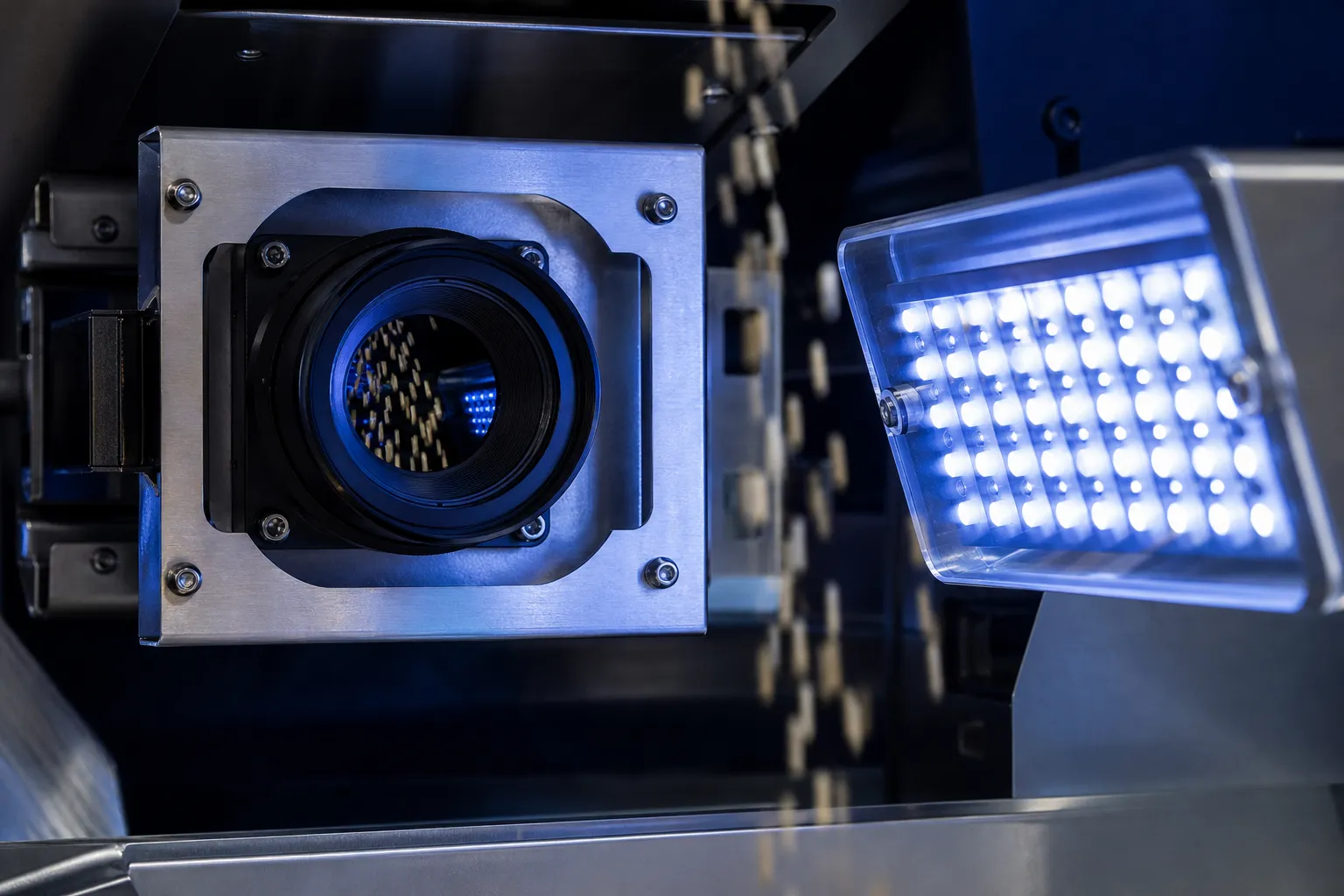
High-Resolution RGB Cameras
High-resolution RGB cameras pick up the slightest color deviation, spots and blemishes under LED lighting.
Precision Air Ejectors
A pinpoint burst of air removes the defective kernel from the line without disturbing the good product flow.
Shape Sorting
Geometry analysis catches stems, stalks and broken kernels even when they match the product's color.
Deep-Learning Classification
Deep-learning models learn complex defect patterns that conventional thresholds miss.
Our Models
Our Optical Sorting Machines
On the color sorting side we have two real models: the belt-type DMAX and the precision nut sorter IDS. We pin down the right one for your product together.
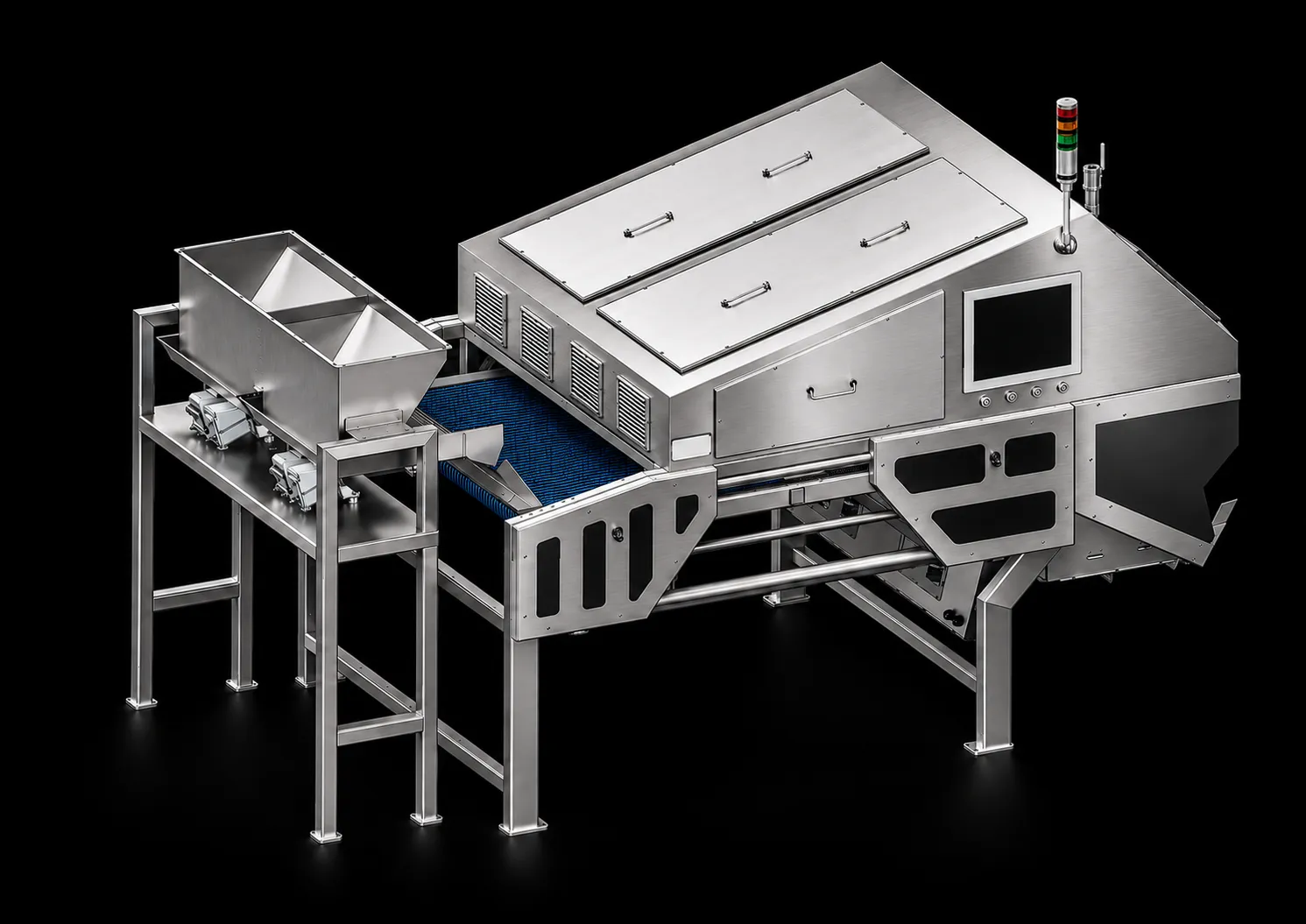
DMAX — Belt-Type
RGB color + shape sorting with a 360° camera cabin. Dried fruit, frozen produce, potato products.
- Raisins, figs, apricots, walnut kernels
- IQF fruit and vegetables, french fries
- Gentle single-layer flow for fragile product
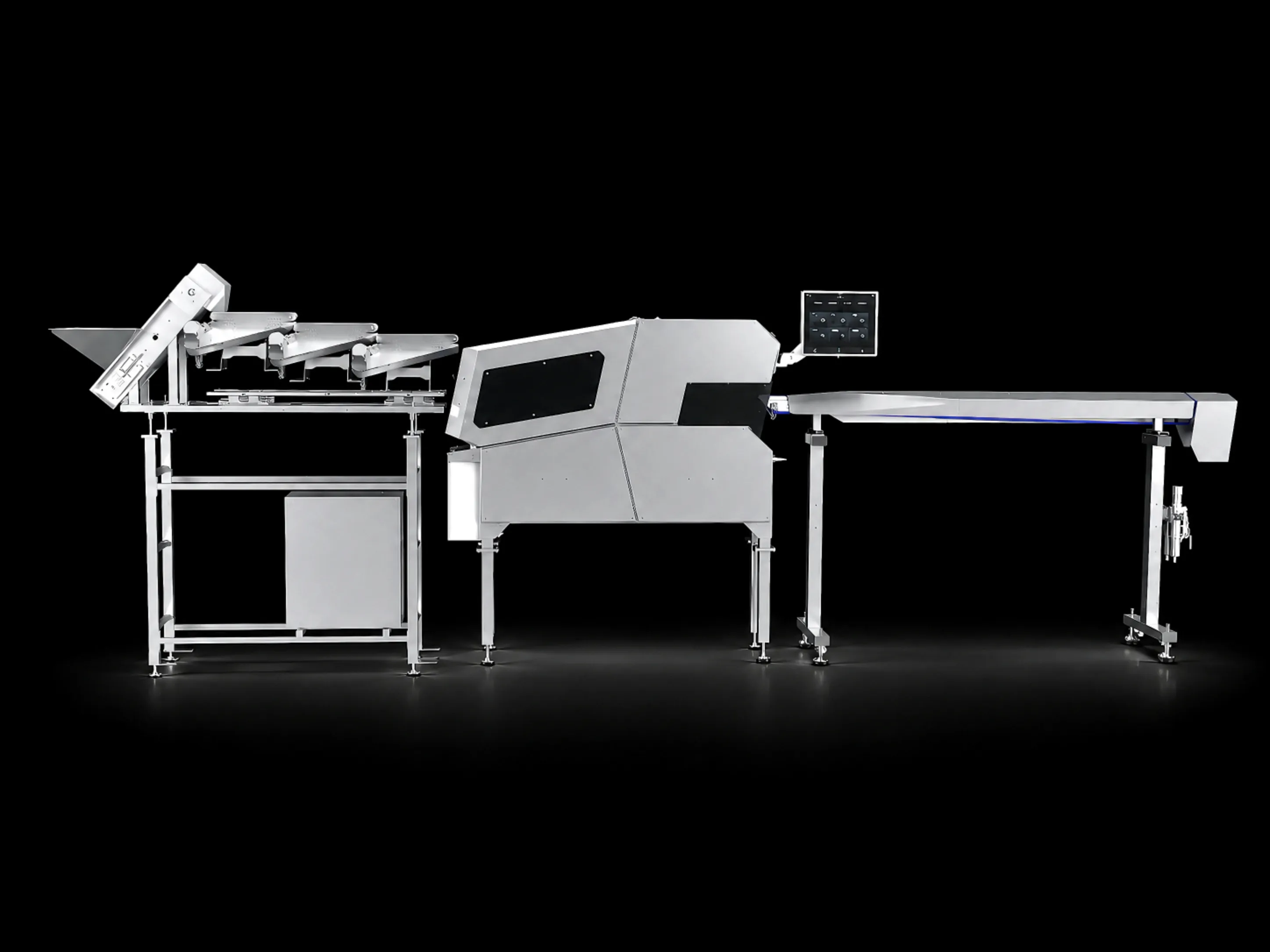
IDS — Precision Nuts
360° cameras, up to 10 channels in a single pass; defect + foreign-material detection and reporting.
- Shelled and in-shell nuts
- Sizing + classification
- Production tracking and analysis report
What Does It Remove?
What the Eye Misses, the Camera Doesn't
- Stones and soil
- Glass and ceramic
- Metal fragments
- Shell and pit fragments
- Stems, stalks and plant debris
- Moldy and rotten kernels
- Color-defective kernels
- Dark, aflatoxin-suspect kernels
Line Solutions
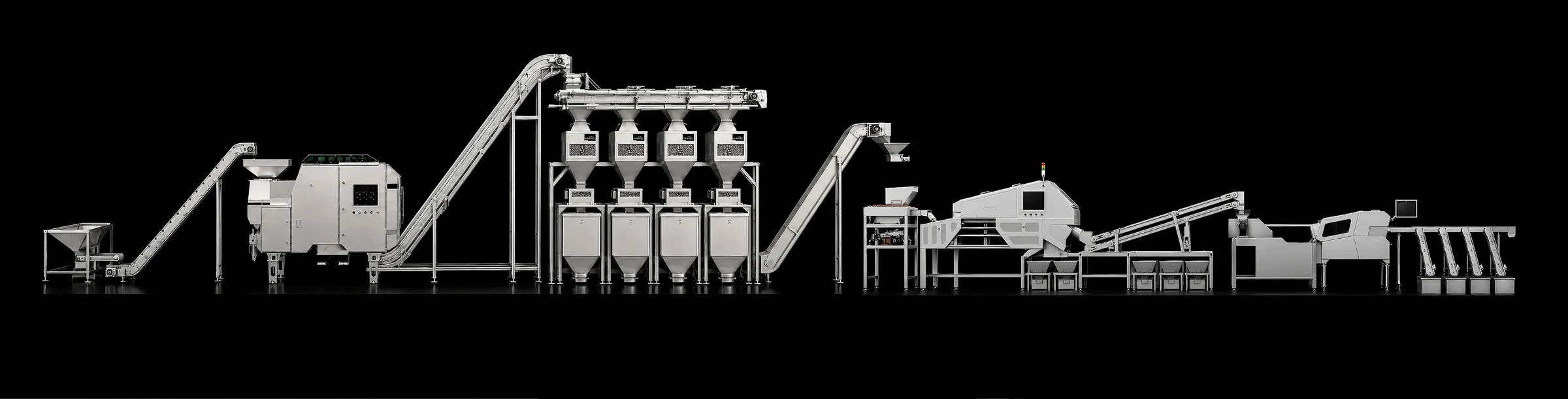
From a Single Machine to a Complete Line
We plan elevators, feeding, sorting and inspection as one project — your machine never stands alone on the line.
Ask the Right Questions
Don't Look at "Accuracy Percentage" Alone
Carryover
Carryover — good product lost to the reject stream — affects your operating profit as much as accuracy does. Always ask for the good-to-defect ratio of the reject stream in the quotation — we share ours openly.
Air Consumption
The ejectors' air consumption means compressor investment and electricity bills. Ask for the L/min figure and the required pressure along with the quotation.
The Service Reality
The machine comes from China; the service comes from Manisa. Ask whether critical parts such as ejector valves, cameras and LED modules are stocked in Turkey.
Applications
Get a Quote for Your Product
Tell us about your product, your capacity and your defect profile; we'll pin down the right model and configuration together.
or email: info@sagemakine.com