
What Is a Sortex Machine? Is It Different from a Color Sorter?
In Turkey, plants from nut processing to pulses often refer to any color sorter simply as a 'sortex.' Yet Sortex is not a product category — it is a registered trademark of the Bühler Group. In this article we look at the technology behind this genericized name, and at the criteria that matter more than the brand when choosing a machine.
The Short Answer: Sortex Is a Brand, Not a Machine Type
In the food processing industry, the phrase "sortex machine" has become so entrenched that many plant operators assume it is the name of a machine category. In fact, Sortex is the color sorter brand of the Switzerland-based Bühler Group, and a registered trademark. Sortex, a long-established manufacturer with roots in London, joined the Bühler Group years ago and continues production today under the Bühler Sortex name.
There are plenty of familiar examples of this in everyday language: we say Kleenex for facial tissue and Xerox for photocopying. Sortex has traveled the same road — the brand name has become the name of the product category. So a business searching online for "sortex machine price" is really looking for a color sorter, regardless of brand. Knowing this distinction matters, because the market includes dozens of manufacturers from different countries, at different technology levels, and colloquially they are all called by the same name.
The Product Behind the "Sortex Machine" Search: the Color Sorter
The correct industry name for this product group is the color sorter, also known as an optical sorting machine. Its job is to detect and remove, at high speed, kernels with color and appearance defects, along with foreign material, from the product flow: rotten and stained kernels, shell fragments, stones, glass, plastic — anything that does not belong is a target.
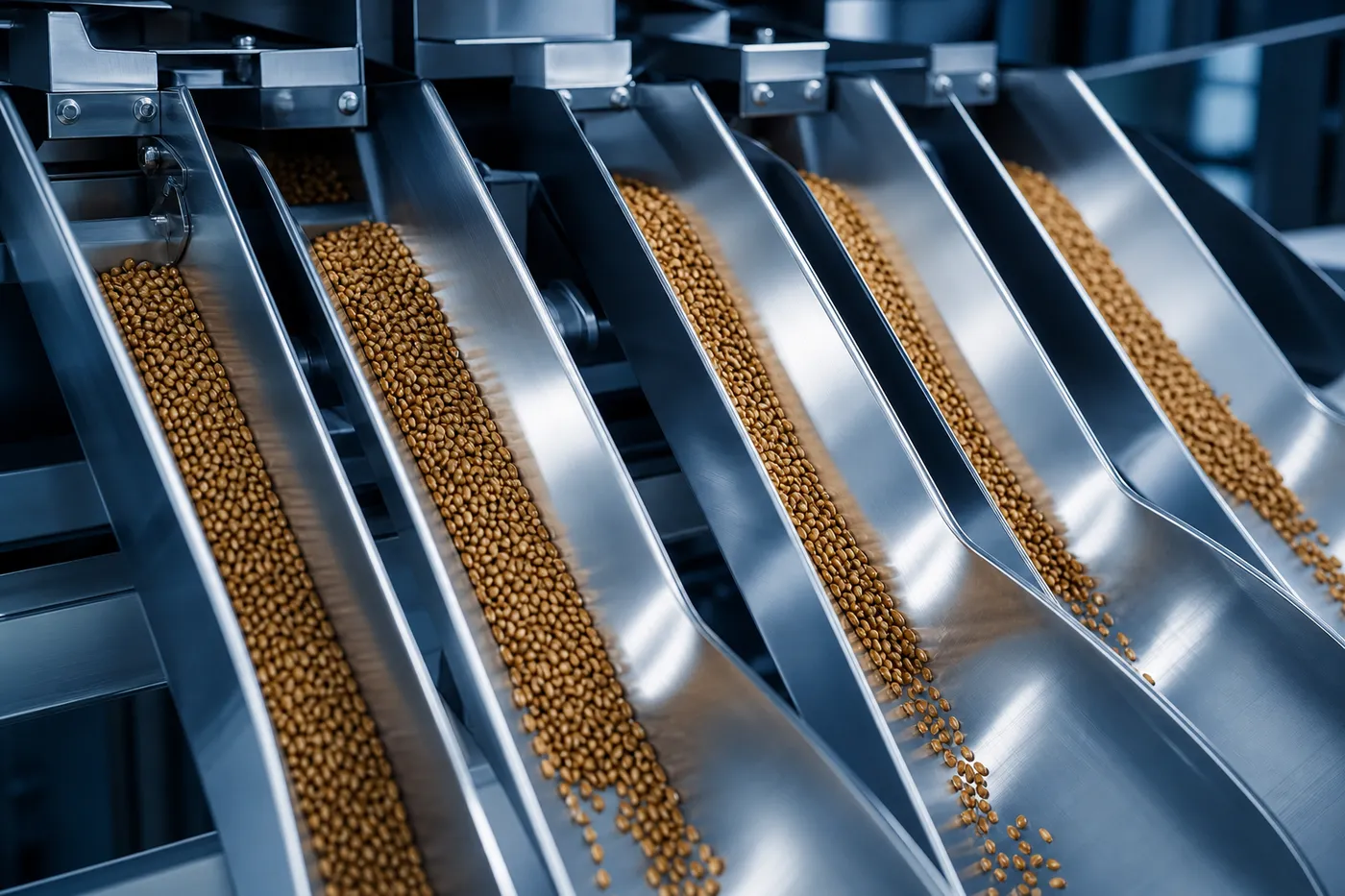
The working principle, in brief: vibratory feeders spread the product in a thin layer across chutes or onto a belt. During free fall or belt travel, high-speed cameras image every kernel; the software flags any kernel that does not match the reference color and shape profile. Precision air ejectors fire within milliseconds, blowing the defective kernel out of the product flow and into the reject stream. For fragile and moist foods, belt-type models come to the fore; the product spreads across the belt in a single layer and is scanned without crushing.
The Market Landscape: From European Brands to Chinese Manufacturers
For many years, European brands led this technology. Bühler Sortex holds an extensive global reference list, particularly in rice, pulses, and nuts. Norway-based TOMRA is another major player known for sensor-based sorting technologies. Both are respected, long-established companies that invest seriously in technology.
Over the past 15 years, however, the picture has changed. Chinese manufacturers have made significant progress by sourcing critical components — camera sensors, lenses, ejector valves — from global suppliers and building at high volumes for their large domestic market. Today, the gap in detection performance has narrowed in many applications, while the gap in investment cost remains pronounced. As a result, the question businesses ask is steadily shifting from "which country's machine" to "which configuration, and what service support." And what drives the price is less the brand than the number of chutes or belts, the camera type and count, optional add-on imaging equipment, and capacity.
What to Look at Instead of the Brand: Five Key Criteria
When choosing a machine, what matters more than the logo is technical capability and after-sales support. Carryover in particular — the good product lost to the reject stream along with the defective kernels — goes unmentioned in most sales conversations, yet it directly affects a plant's yield.
| Criterion | Why It Matters |
|---|---|
| Camera technology | Resolution, full-color imaging, and any optional add-on sensors determine which defects and foreign materials can be detected. |
| Carryover | Good product escaping into the reject stream is a direct yield loss; low carryover shortens the payback period of the investment. |
| Service network in Turkey | When a line stops mid-season, waiting for a technician from abroad means days of lost production. |
| Spare parts stock | Having ejectors, valves, lighting, and electronic boards stocked in Turkey keeps downtime to a minimum. |
| Written performance commitment | Seeing the expected sorting accuracy and carryover for your own product stated in the quotation is a far more reliable basis for a decision than catalog figures. |
One point worth making clear: a color sorter works on differences in color and appearance. For foreign material that is the same color as the product — glass, metal, or stone — or for objects embedded inside the product, the right solution is an X-ray food inspection system. In many facilities, the two technologies run in sequence and complement each other.
The SAGE Makine Approach
At SAGE Makine, drawing on 22 years of industry experience, we prefer to present the color sorters and X-ray food inspection machines we import not through brand debates, but through their real performance on your product. From our base in Manisa, we deliver service and spare parts support from within Turkey. We are at your side so you can decide based on your product's real needs rather than catalogs — request a quotation for the configuration that fits your needs.